J&K CM Omar Abdulla presents budget 2026-2027 in Assembly
Full budget speech
06/02/2026
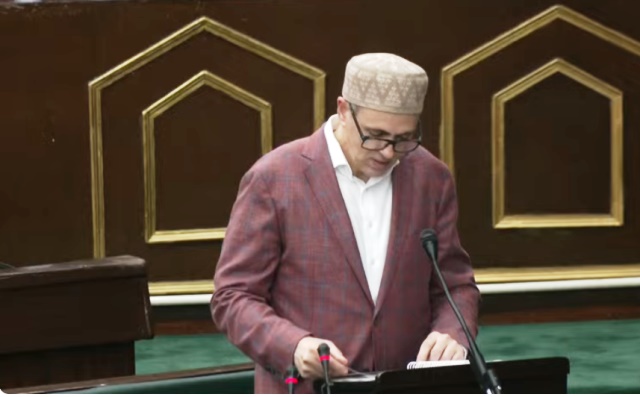
Jammu, February 06 (KIP)-Jammu and Kashmir Chief Minister Omar Abdullah presented the 2026–27 Budget in the Assembly on Friday, marking his second budget as Chief Minister of the Union Territory.
Here is full budget speech of Chief Minister and the Minister of Finance
Hon'ble Speaker Sir
Safar Taveel Hai, Bhoj Bhi Bari Hai. Par Har Surat, Yeh Safar Jaari Hai.
Jaari Hai…
1. With deep humility and unwavering resolve, I rise today to present my Second Budget as Finance Minister. It is a privilege to be entrusted with the responsibility of shaping the financial future of our land. This Budget is not merely a ledger of figures; it is a fiscal compass charting our path towards a brighter horizon. It lays strong foundations for enduring economic growth, social harmony, and sustainable prosperity. As we embark on this shared journey, I invite every Hon’ble Member of this august House to come together and work collectively to build a strong and flourishing Jammu and Kashmir.
2. The soul of Jammu and Kashmir has been forged in resilience and strengthened by hope. Through changing seasons and testing times, our people have stood firm, drawing wisdom from the past and courage for the future. Guided by this enduring spirit, our Government is committed to transforming Jammu and Kashmir into a modern, progressive, and economically vibrant region. Together, we will turn obstacles into stepping stones and aspirations into achievements.
3. We are building a business-friendly ecosystem that invites innovation and investment, turning Jammu and Kashmir into a hub of enterprise and ideas. This vision has been shaped through wide-ranging consultations with elected representatives, industry leaders, and stakeholders. Their voices have enriched this Budget and ensured that it remains people-centric. By engaging directly with every Member of this House, we have laid the cornerstone of a new culture of participatory governance.
4. The past year has been nothing but challenging for Jammu & Kashmir and for the entire nation. At national level, we see our growth path suddenly challenged by geo-political challenges. While the national economy is accelerating at 6–8% growth rate, we see our access to global markets being constrained by trade frictions. Even in Jammu & Kashmir, just as our economy was consolidating
with renewed vigour, the barbaric terrorist attack at Pahalgam and its aftermath shocked us. The devastating floods in August and September have severely battered the Jammu region. These two calamities have further accentuated the fiscal challenges before us. All the sectors of economic activity, including tourism, handicrafts, horticulture and agriculture are badly affected. There is a substantial loss of jobs and business in all sectors, leading to financial stress on the families.
5. This Budget gives us an opportunity to analyse these challenges incisively and respond to them resolutely by reforming with greater vigour. This Budget is anchored in the vision of inclusive and sustainable growth and driven by fiscally prudent strategic investments across infrastructure, public services and governance. It seeks to bridge regions, unlock potential, and create pathways of opportunity especially for our youth and women, who are the architects of tomorrow.
STRENGTHENING FISCAL SITUATION
6. Jammu & Kashmir’s fiscal stress stems from high committed expenditure and limited own-revenue capacity. Own tax and non-tax revenues cover only 25% of our budgetary needs. The geographical difficulties, structural constraints, and inefficiencies—especially in the power sector—
further accentuate this stress and lead to reliance on central support. To address this, my government has pursued fiscal reforms to enhance revenues, rationalize spending, and improve fiscal transparency.
7. While the GST rate rationalization undertaken by GST Council has dented our revenues, we have leveraged the analytical inputs from Business Intelligence Unit (BIU), GST Network (GSTN) and Bhaskaracharya National Institute for Space Applications and Geo-informatics (BISAG) to prevent leakages and ensure strong GST enforcement. We have deployed the e-Abgari portal and e-Stamping to streamline Excise administration and Land Registration. We also ensured transparent auctions to boost revenues. This has led to our tax revenue and non-tax revenue rising to ₹10,265 crore and ₹4,964 crore respectively as of December 31, 2025. While these figures are lower than last year’s collections of ₹10,624 crore and ₹5,114 crore respectively, we are making sustained efforts to exceed last year’s collections by 31st March.
8. The Government's fiscal stress stems from the committed expenditure on salaries, pensions and debt servicing which alone account for nearly 60% of overall outlay. Hence initiatives in debt management are being taken to lower high-cost liabilities and eliminate off-budget debt. We are
strengthening debt sustainability by keeping all borrowings within approved limits and improving liquidity management. For the third consecutive year, we have enforced the austerity measures for curbing non-priority spending. My government is pursuing the power sector reforms to reduce losses and improve billing efficiency. We are expanding the consumer base and aerial bunched cables and executing loss reduction works in all districts. These reform measures are expected to ease financial stress and lay the foundation for a fiscally prudent development path.
ACCELERATING INVESTMENTS
9. Still Jammu & Kashmir continues to face significant infrastructure deficits in areas like road connectivity, water supply, sewerage, tourism, and power. For addressing these challenges, substantial financial resources and continued support from the Central Government are essential. My government actively engaged with the Central Government to resolve our fiscal issues. I met with Union Home Minister and Union Finance Minister on multiple occasions. I am pleased to share that the Central Government has remained cognizant of our difficulties and consistently supported us through special assistance.
10. This year, Jammu & Kashmir was brought under the ambit of Special Assistance to States for Capital Investment (SASCI) Scheme. This decision reflects the confidence of the Government of India in the reform orientation, financial discipline, and execution capacity of Jammu & Kashmir. SASCI scheme provides us 50 year interest free loans for undertaking capital investments and infrastructure projects. It has emerged as a transformative fiscal instrument as it emphasizes on substantive reforms in several key sectors by providing financial incentives for such reforms. My government has proactively leveraged this new opportunity.
11. Under the untied allocation of ₹1,431 crore, we are accelerating execution capital projects, including the hydro-electric power projects. Our capital works aim at strengthening infrastructure across critical sectors. Recognising the progress achieved and the effective utilisation of funds by Jammu & Kashmir, the Central Government approved an additional allocation of ₹1,431 crore under the untied component.
12. Building resilience and reducing disaster risks is now a critical priority under SASCI. After the devastating floods in Jammu region, we ensured detailed visit of the inter-ministerial team and coordinated their inspections. My government submitted detailed reports and proactively pursued
financial assistance with the Central Government which has now approved further allocation of
₹1,431 crore for disaster mitigation and restoration works. We will utilize these SASCI funds for the creation of protective and preventive infrastructure, and strengthening preparedness.
13. Under the Reform components of SASCI, Jammu & Kashmir has undertaken far-reaching Mining Sector Reforms, qualifying for incentive of ₹100 crore. Similarly, the Land governance reforms were started to improve transparency, ease of doing business, and citizen trust. As on date, land records of 6,839 villages have been fully computerised, Cadastral maps in 6,464 villages are digitised. Over 68 lakh land parcels have been recorded and ULPIN has been assigned to 13.25 lakh parcels. The Revenue Court Case Management System is operational in 881 revenue courts, significantly reducing delays, disputes, and inconvenience to citizens. These reforms helped us complete the Digital Crop Survey and qualify for an incentive of ₹60 crore. Under the NAKSHA initiative, the aerial survey in Bishnah town has been completed, thereby earning an incentive of ₹5 crore.
14. Under Urban Planning Reforms, a GIS-based databank of industrial land has been integrated with the India Industrial Land Bank. Reforms such as land pooling, GIS-based planning, green buildings,
flexible zoning, road rationalisation, and amendments to building regulations have been undertaken. Based on these, my government has submitted a proposal for availing ₹415 crore under this incentive.
15. I am happy to note that the fiscal consolidation measures, the persistent implementation of reforms and the strategic capital investments are accelerating our economy. Our Gross State Domestic Product (GSDP) is estimated to grow from ₹2,36,059 crore in 2023–24 to ₹2,62,458 crore for 2024–25 and is projected to rise to ₹2,88,422 Crore in 2025-26 signalling a decisive leap in our GSDP. In 2025-26, the primary, secondary, and tertiary sectors are projected to contribute 20%, 18%, and 62% to GSVA, respectively.
16. Jammu & Kashmir’s economy is estimated to grow at 11 percent, driven by our sustained initiatives and strategic policy interventions. This positive GSDP trajectory has supported Jammu & Kashmir to tackle the aggravated fiscal challenges after the Pahalgam tragedy and the recent floods. With confidence in our direction and faith in our collective strength, I am certain that Jammu and Kashmir will emerge as a leading region of development, innovation, and opportunity.
FORTIFYING GOVERNANCE & ADMINISTRATION
17. My Government is working to strengthen administrative capacity, modernize civil services, ensure efficient recruitment, and enhance institutional infrastructure in Jammu & Kashmir. We have actively implemented Mission Karmayogi, which aims to train civil servants through its “role-based,” competency-driven approach. Out of our 3.74 lakh employees, 1.25 lakh employees have been onboarded and 53,073 employees are actively engaged in their training.
18. My Government has made employment generation a central pillar of its governance agenda, with a clear focus on speed, transparency and merit in public recruitment. I am pleased to inform this House that 7,650 candidates have been appointed to Government service during the year 2025 purely on the basis of merit, through a transparent and technology-driven recruitment process, restoring faith of our youth in public institutions.
19. I propose to fast-track the recruitment process for 23,800 additional posts, including 2,800
gazetted, 14,000 non-gazetted and 7,000 Class- IV posts, so that these vacancies are filled in a strictly time-bound manner.
20. In addition, 910 compassionate appointments have been provided during 2025, ensuring that families who have lost their sole breadwinners are able to live with dignity, security and hope. These measures reflect our firm resolve that every deserving youth gets a fair opportunity, and that public employment in Jammu and Kashmir remains transparent, accountable and accessible to all.
21. My Government is fully conscious of the long- standing aspirations of daily rated, casual and temporary workers, who have served the administration for years under difficult conditions and with limited job security. Last year, a high-level committee was constituted to examine all legal, financial and administrative aspects of regularisation of daily rated workers, so that a fair, transparent and sustainable policy framework could be evolved. I assure this House that my Government is committed to finding a just and humane resolution to this long-pending issue, and based on the recommendations of the committee, a structured and phased roadmap for regularisation will be announced in the coming period. Our objective is to ensure that those who have devoted the prime years of their lives to public service are given dignity, security and a stable future, within the framework of law and fiscal responsibility.
22. My Government acknowledges the invaluable contribution of ASHA and Anganwadi workers, who form the backbone of our public health and early childhood care systems. Their dedication at the grassroots level, especially in reaching the most vulnerable sections, deserves our deepest appreciation. Government is committed to remove impediments to ensure timely release of their honorarium.
23. I am also pleased to inform this House that the honorarium of Vocational Instructors has been enhanced, reflecting our commitment to recognising the role of skilled educators in strengthening employability and vocational education.
24. We have strengthened the infrastructure of our recruitment and accountability agencies. Construction of police stations for the Anti- Corruption Bureau in Jammu, Baramulla, and Anantnag will be completed by the end of the financial year. Similarly, the Jammu office of JKSSB is nearing completion and the construction of JKSSB building at Srinagar is expected to be completed by June 2027.
25. My Government has restored the Darbar Move in a structured and modernized manner,
reaffirming its importance as a unique administrative tradition that strengthens regional integration and participatory governance.
26. The restoration of the Darbar Move has already begun to revive economic activity in Jammu, benefiting transport operators, hospitality sector, small traders, service providers whose livelihoods depend on this seasonal movement of administration.
27. My Government is working to strengthen facilities and welfare measures for Government employees associated with the Darbar Move, including improved accommodation, better office infrastructure, digital connectivity and enhanced logistical arrangements, so that the Move becomes more efficient, employee-friendly and cost- effective.
28. This approach ensures that the Darbar Move is not merely symbolic, but a productive governance mechanism that supports both economic vitality and employee well-being.
ADVANCING AGRICULTURE AND ALLIED SECTORS
29. The agriculture and allied sectors are undergoing transformation through interventions under Holistic Agriculture Development Programme (HADP) and the Competitiveness Improvement of Agriculture and Allied Sectors Project (JKCIP),
backed by IFAD assistance. The focus has shifted from subsistence practices to a diversified, climate- smart and income-centric agricultural economy. The cultivated area has expanded from 12.71 lakh hectares to 13.50 lakh hectares. The Seed Replacement Rate (SRR) has risen from 12 percent to 22 percent, enhancing productivity and crop resilience.
30. Protected cultivation has expanded and 332 hi- tech greenhouses and 848 polyhouses established over 29.84 hectares. These facilities have enabled enhanced cropping intensity up to 250% and reduced climate-induced risks. The area under oilseeds has expanded substantially from 1.4 lakh hectares to 2.1 lakh hectares, resulting in a doubling of oilseed production and reducing dependence on imported edible oils.
31. Kissan Khidmat Ghars (KKGs) are empowering farmers by enabling technology-driven last-mile delivery. By 2025–26, over 8 lakh farmers were onboarded onto Kisan Sathi and KKG apps, with 1,300 KKGs getting operational. By March 2027, universal digital farmer coverage is targeted through full integration of Digital Crop Survey (DCS). Under PM Fasal Bima Yojana, 2.01 lakh farmers covering 75,732 hectares were registered during Kharif 2025, ensuring effective crop risk mitigation.
32. Under Command Area Development (CAD) and Modernization of Command Area Development (M-CAD), irrigation potential of 4.53 lakh hectares has been created by December 2025 and further 16,207 hectares potential is proposed for 2026–27. Mushroom cultivation has emerged as a high- return allied enterprise, with production increasing by 31% from 2,100 MT to 2,742 MT over the past three years through establishment of 227 mushroom units and distribution of 1.18 lakh compost bags. Apiculture has popularized with honey production growing at 77% in three years to over 3,895 MT, aided by distribution of 1.03 lakh bee colonies and establishment of 11 honey processing units.
33. Under the High-Density Plantation Scheme for horticulture, about 1,119 hectares have been covered since 2017–18 till December 2025 with assistance of ₹139 Cr. Further, 18,915 hectares are covered under medium-density plantations. Our fruit production increased from 26.43 LMT (2023– 24) to 26.92 LMT (2024–25). We aim to reach
29.72 LMT production by 2029–30. Further, 1455 hectares shall be covered during 2026-27 under High/Medium Density Plantation.
34. A mega fruit nursery is commissioned at RS Pura, Jammu with capacity of 5 lakh quality saplings of subtropical fruits. Two elite nurseries/Plant
Establishment Quarantine (PEQs) are being developed at Marta (Udhampur) and Lehwan (Anantnag) for providing high-quality planting material.
35. During year 2026–27, public and private sector nurseries aim to produce 8.00 lakh planting material and 17.84 lakh rootstock fruit plants. Further, 06 hectares of mother orchards, 15 hectares of rootstock banks and 40 hectares of plant propagation units will be established during 2026-27. Further strengthening conservation efforts, SKUAST, Jammu has established a state-of-the-art Ex-Situ Gene Bank, becoming the third institution in India with such a facility.
36. The dairy and livestock sector has recorded robust growth with annual milk production reaching 28.75 lakh metric tonnes, driven by systematic breed improvement, expanded artificial insemination coverage, and improved animal management practices.
37. I am proposing setting up of 7 Milk Processing Plants of 1 Lakh Liter per day capacity in J&K costing appx. Rs. 770 Crore funded through UT Capex and GoI Scheme. This scheme is going to benefit 11 Lakh Dairy farmers. My target is to take J&K in milk processing from current 4% to 25% in next few years.
38. We are proposing a top-up subsidy of 15% under the Integrated Dairy Development Scheme (IDDS) for PMFME beneficiaries establishing milk processing. The formation of 4,000 new Dairy Cooperative Societies (DCS), along with Milk FPOs and SHG clusters will strengthen grassroots ownership and efficient procurement. To support this ecosystem, 40 Bulk Milk Coolers (BMCs), 40 testing labs, 200 Milk-o-Chill units, and 5 insta chillers will be deployed.
39. For transforming the dairy ecosystem, we will be expanding milk processing from 5% to 12% for enabling efficient handling of 10 LLPD and enhancing productivity. This will boost organized dairy cooperative turnover from ₹407 crore to
₹1,898 crore annually, translating into an additional
₹300 crore in income for 3 lakh farmers each year. With these interventions, annual milk production is projected to increase to 32 lakh metric tonnes and milk collection and chilling capacity is expected to rise to 5.5 LLPD by 2026–27.
40. The e-National Agriculture Market (e-NAM) platform has been successfully rolled out, enabling farmers to sell their agricultural and horticultural produce without physically bringing it to mandis. Out of our 19 wholesale mandis, 17 mandis are integrated with the e-NAM platform. Since its inception in 2020–21, over 55,000 farmers, traders,
FPOs, and commission agents are registered and cumulative trade worth ₹1,721 crore has been conducted through e-NAM up to December 2025.
41. To further boost the poultry sector, we will establish 800 commercial poultry units and 50,000 backyard poultry units so as to produce approximately 250 million eggs. This will make poultry farming more remunerative and reduce dependence on imported poultry inputs. Further, fish production is expected to increase from 31,000 MT in 2025–26 to 33,000 MT in 2026–27, contributing to improved availability of fish and enhanced incomes for fish farmers.
The Agriculture and Allied sectors has been allocated
₹1,878 crore under capital expenditure for 2026-27. RURAL DEVELOPMENT
42. Under the Mahatma Gandhi NREGA, 250.07 lakh person-days were generated in 2025-26. The construction of Panchayat infrastructure is progressing steadily, with 367 Panchayat Bhawans tendered, 354 allotted and 297 works taken up. Under PMAY, 3.21 lakh houses have been completed, while construction of the remaining 14,000 houses is in progress. Soil and moisture conservation activities such as contour bunding, terracing, water harvesting and field
protection works have been initiated under IWMP, resulting in treatment of 1,219 hectares of degraded land and completion of 369 conservation works covering 5,286 hectares in 2025-26.
43. Under the Lakhpati Didi initiative, 2,00,952 SHG women have already become Lakhpati Didis. The remaining 32,048 potential households will be covered by June 2026 to enhance women’s economic empowerment and rural enterprise. We will proactively increase the number of Lakhpati Didis by converging this initiative with Mission Yuva. Under UMEED, 98,312 women farmers were trained in 2025-26. JK-RLM facilitated credit linkage for 13,103 SHGs amounting to ₹418 crore, benefiting roughly 26,200 households.
44. Capacity building under the Rashtriya Gram Swaraj Abhiyan (RGSA) has trained 14,685 officers and officials, including Panchayat Secretaries. The year 2025 was designated as “J&K Green Mission 2025” to drive community-led environmental stewardship and Plantation drives.
The Rural sector has been allocated ₹3,456 crore under capital expenditure for 2026-27, an increase of ₹40 crore from the revised allocation for 2025-26.
TOURISM
45. My Government considers tourism as a key pillar of economic growth and livelihood generation in Jammu and Kashmir. Despite the challenges faced during the year, including the unfortunate Pahalgam incident and subsequent floods, Jammu and Kashmir recorded over 1.61 crore tourist visits in 2025, reflecting the resilience and continued confidence in our destination. I propose to build a sustainable, inclusive and year-round tourism economy, balancing infrastructure development with environmental conservation and community participation. Our focus will be on developing new world-class tourist destinations, strengthening tourism circuits, and positioning Jammu and Kashmir as a global tourism brand, with financial and technical support from the Ministry of Tourism, Government of India.
46. Environmental infrastructure has been prioritized, with sanctioning of 3.2 MLD STP at Gulmarg and starting of upgradation of Solid Waste Management Plant. Similar measures are planned at Sonamarg for reinforcing protection of fragile ecosystems. My government is also working on restoration of heritage sites and shrines through the Culture Department. This initiative will aim to preserve cultural identity, boost local economies through tourism, and strengthen community pride.
47. For diversification of Tourism towards winter sports, water sports, and adventure tourism, procurement and execution of supportive infrastructure is underway. Water sports facilities at Wullar–Manasbal and Bani–Basohli are being developed. Sports tourism is also being promoted through strategic invents. The Kashmir Marathon and Jammu Marathon are placing J&K on the national and international sporting map. The 2nd Kashmir Marathon 2025 with a three-day Expo recorded over 3,000 registrations, with participation from 27 States/UTs and 11 countries. We garnered
₹2.11 crore in sponsorships and ₹0.20 crore in registration fees, validating its economic and promotional potential. In 2026-27, we will be organizing an International Film Festival in association National Film Development Corporation. The festival will bring the world cinema to Jammu & Kashmir, promote cultural diversity and stimulate local economy.
48. We have launched JK Tourism Mobile App for offering verified real-time information, integrated booking services, and AI-based assistance. This will become the entry point for tourists providing comprehensive support and boost business opportunities for local hotels and entrepreneurs. The Homestay Policy addressed peak-season accommodation shortages while empowering local
households. We have established over 1,600 registered homestays in Kashmir Division and 300+ in Jammu Division. We have partnered with J&K Bank to provide concessional assistance for such homestays, which will be popularized through our portals and JK Tourism Mobile App.
49. Skill development and entrepreneurship form a core pillar of the Government’s employment strategy in Jammu & Kashmir. We intend to launch a skill mission to equip our youth with superior skills. For this Skill and Entrepreneurship framework will be developed covering foundational skilling, internships, and industry-ready technical skilling. The mission will emphasize upgradation of polytechnics and ITIs, on-the-job training opportunities and lifelong learning.
The Tourism and Youth Affairs sector has been allocated ₹472 crore under capital expenditure for 2026-27, an increase of ₹61 crore from the revised allocation for 2025-26.
CULTURE
50. My Government accords high priority to the preservation, restoration and promotion of our rich cultural and heritage assets, which are central to the identity, history and tourism potential of Jammu and Kashmir.
51. During 2026–27, provision has been made for completion of all ongoing projects under Phase-I of the Heritage Revival, Restoration and Maintenance Scheme, and for fast-tracking the execution of approved projects under Phase-II and Phase-III. I further propose to ensure comprehensive coverage of heritage conservation, including execution of heritage projects of the Tourism Department across Jammu and Kashmir, and the value-based restoration of the Mughal-era Nishat Garden in Srinagar.
52. I also propose to expedite the modernisation of the SPS Museum, strengthen and modernise the public library network, and expand inclusive cultural infrastructure through establishment of new Cultural Centres at Bandipora, Shopian, Anantnag, Kishtwar, Udhampur, Poonch and Budgam.
53. In addition, enhanced budgetary support will be provided to the J&K Academy of Art, Culture and Languages to promote youth engagement through cultural programmes and national initiatives ensuring that our cultural heritage remains vibrant, accessible and future-oriented.
The Culture Department has been allocated ₹109 crore under capital expenditure for 2026-27.
INDUSTRIES
54. Despite the challenging environment, the Industries sector recorded strong progress during 2025–26, reflecting investor confidence. Since 2020, 2,227 industrial units in the organised sector, involving an investment of ₹15,940 crore and generating employment for 73,827 persons, have commenced production. Investment grounding reached an all- time high of ₹5,260 crore till December 2025. Under the New Central Sector Scheme (NCSS) of
₹28,400 crore, 971 applications involving ₹14,292 crore were registered, with 87% of new and expansion units commencing production. Claims of
₹403 crore were approved under NCSS, taking cumulative approvals to ₹840 crore. For 2026–27, amendments to the J&K Industrial Policy 2021–30 are proposed to sustain industrial growth post- NCSS, ensuring continued employment and income security.
55. My government is taking decisive measures to support medium and small enterprises (MSMEs) and facilitate ease of doing business. I propose to introduce a Self-Certification Scheme for MSMEs, under which entrepreneurs will receive a single in-principle approval with a three-year grace period for clearances, enabling them to start operations without procedural delays and compliance bottlenecks. I further propose to
extend incentives to sick MSMEs at par with new industrial units, so that viable enterprises are revived, existing jobs are protected, and business closures are prevented. Reimbursement of CGTMSE (Credit Guarantee Fund Trust for Micro and Small Enterprises), guarantee fees up to ₹10 lakh loans was approved with an allocation of
₹41.30 crore. Jammu & Kashmir secured the 5th rank in Ease of Doing Business in November 2025.
56. The first-ever MSME Health Clinic was launched with IIM Jammu, covering 417 units, with focused revival plans underway for 70 sickness-prone MSMEs. MSME formalisation surged, with Udyam registrations rising from 0.24 lakh in 2021 to 5.85 lakh in 2025–26, and a target of 7.1 lakh units by 2027. We received the national MSEFC Excellence Award for online and timely MSME dispute resolution. The startup ecosystem expanded from 69 startups in 2020 to 1,342 in 2025–26, including
490 women-led ventures.
57. A new Startup Policy was launched and 18 startups were sanctioned seed funding of ₹20 lakh each. Over 1,100 ideas were generated through bootcamps and outreach. Enhanced allocations are proposed in 2026-27 for upgrading infrastructure in existing Industrial Estates to support MSMEs. Startup support will be strengthened through higher budgetary allocations, incubators and co-working
spaces in Srinagar and Jammu. To sustain rural self-employment, higher allocation is proposed under J&K Rural Employment Generation Programme (JKREGP) for FY 2026–27.
58. The Handloom and Handicrafts sector provides direct and indirect employment to nearly 4.45 lakh individuals, primarily from economically weaker sections. GI certification capacity increased fivefold, eight new crafts were GI-registered in 2025, and 17 more are in advanced stages. We are strengthening QR-code-based certification and testing infrastructure. We won the National ODOP Gold Award for the second consecutive year. Artisan Credit Card saturation is being pursued aggressively, with ₹21.06 crore disbursed to 1,011 artisans during 2025–26. Our four artisans received National Honours, including the Shilp Guru Award and National Awards for Handicrafts.
The Industry and Handicrafts sector has been allocated ₹461 crore under capital expenditure for 2026-27, an increase of ₹137 crore from the revised allocation for 2025-26.
TRANSPORT SECTOR
59. The Institute of Driving Training and Research (IDTR) at Kot Bhalwal will be made operational this year for professionalizing road safety in
Jammu. The IDTR will be equipped with seven automated driving tracks and state-of-the-art machinery, ensuring that every new driver is trained to the highest national safety standards.
60. In parallel, the transition to Automated Testing Stations (ATS) is underway to ensure vehicle fitness and commuter safety while protecting the environment. This technology-driven approach involves electronic evaluation of brakes, suspension, and emissions, replacing manual fitness testing. Registration certificates have already been issued to private operators, with the first ATS operational since September 2025. The Inspection & Certification Centre at Samba will be soon commissioned to serve as a government-sector hub for automated testing.
61. JKRTC continues to provide uninterrupted transport of passengers and food grains and horticulture products, reinforcing its role as a reliable and resilient public transport and logistics provider. We need to strengthen inter-district transportation, particularly in rural and underserved areas to provide reliable, comfortable, and affordable services. The revival of Jammu & Kashmir Road Transport Corporation (JKRTC) will be a key focus in 2026-27. As part of a green mobility initiative under the PM e- DRIVE scheme, 200 electric buses are planned to
be inducted, with an estimated investment of ₹350 crore, replacing aging diesel fleets with modern, zero-emission vehicles. To further strengthen JKRTC’s commercial and logistical capacity, 50 new trucks will be procured under SASCI funding of ₹75.70 crore.
The Transport sector has been allocated ₹21 crore under capital expenditure for 2026-27.
MINING SECTOR
62. While we are blessed with unique mineral wealth, it is important that it is harnessed transparently and sustainably. Hence we are implementing the Integrated Mining Surveillance System (IMSS) in collaboration with BISAG-N. This system will enable satellite-based monitoring of mining areas, generate real-time triggers on illegal mining activities and share this with enforcement officers for prompt verification and legal action. The first phase of IMSS has been operationalized and over 110 triggers have been generated for technology- driven action for curbing illegal mining.
63. To strengthen on-ground enforcement, e-Challan machines have been introduced in collaboration with J&K Bank for issuing on-the-spot challans to violators. The first-ever auction process for the seven limestone mineral blocks in Jammu &
Kashmir marks a significant step in implementing mining reforms. This will enable transparent digital auctions for mineral resource allocation and boost our revenues.
The Mining sector has been allocated ₹4 crore under capital expenditure for 2026-27, an increase of ₹2 crore from the revised allocation for 2025-26.
HEALTH & MEDICAL EDUCATION
64. Significant upgradation of health infrastructure in the recent years has improved public healthcare delivery and medical education. More than 4,000 health infrastructure facilities have been developed, including 15 Medical Colleges, two AIIMS, and two State Cancer Institutes.
65. The new 160-bedded block at the Bone & Joint Hospital, Srinagar with cost of ₹140 crore has been operationalised since July, 2025. The commissioning of the 100-bedded Mother and Child Care Hospital at Lamberi (Rajouri), upgradation of SDH Billawar to a 100-bedded facility, construction of a 50-bedded Hospital at Sunderbani, upgradation of the 100-bedded Hospital at Nowshera, and the 125-bedded District Hospital at Reshipora, Budgam has been accelerated.
66. To strengthen diagnostics, the process for installing
1.5 Tesla MRIs in new GMCs and 3 Tesla MRIs at GMC Jammu, GMC Srinagar and SKIMS has been initiated. Installation of CT Scan machines is underway in major hospitals, like DH Budgam, SSH Srinagar, DH Poonch, SMGS Jammu, CD Hospital Jammu and SMHS Srinagar. This initiative will be further expanded. PET-Scan facilities will be installed at GMC Srinagar and will be extended to GMC Kathua during 2026–27 to enhance cancer diagnostics.
67. Mobile Medical Units and Mobile Dental Units are proposed to improve outreach in far-flung areas. The SEHAT App has been launched to enhance healthcare delivery by integrating services, providers, and patients on a single digital platform. More than 16 lakh users have started seeking benefits on the App. Digital health and remote care are being upgraded with provision of ₹32 crore for establishing 80 Telemedicine Centres and enabling clinical consultation in far-flung regions. De-addiction OPDs are functional and six new facilities are under construction to expand de-addiction support.
68. Construction of Homeopathic College at Rakh- Hoshiari, Kathua, and Ayurvedic College at Amargarh, Sopore will commence in 2026–27 to expand AYUSH education and care options. All
523 Ayushman Arogya Mandirs dedicated to Ayush services have been fully operational across J&K, providing Ayush therapies and preventive health interventions. Ayush infrastructure has been expanded by commissioning the 10-bedded Integrated Ayush Hospital at Jammu and Government Ayurvedic Hospital at Kulgam.
69. Medical education capacity has been strengthened. During the current year, 548 medical seats will be added, comprising 340 MBBS, 128 PG, 34 PG (Ayurveda), and 46 DNB seats. AIIMS Kashmir will be commissioned by June 2026. GMC Srinagar and GMC Jammu have each been allotted 20 additional MBBS seats. Further, GMC Doda, GMC Anantnag, GMC Baramulla and GMC Kathua have each been allotted 50 additional MBBS seats, thereby expanding pool of medical professionals. Quality nursing education will be enhanced through creation of trained manpower in 10 Nursing Colleges. With the unprecedented approval of 240 MBBS and 120 PG seats, infrastructure of all GMCs will be strengthened in FY 2026–27 with budget of ₹216.00 crore.
The Health & Medical Education sector has been allocated ₹1,866 crore under capital expenditure for 2026-27.
SCHOOL & HIGHER EDUCATION
70. Path-breaking reforms have been undertaken in the education sector to ensure comprehensive implementation of the National Education Policy (NEP). To strengthen early childhood education, pre-primary classes have commenced in 15,550 schools. We provisioned ₹30 crore for establishing 5,000 Kindergartens with child-friendly infrastructure. In 2025–26, 1,735 Kindergartens were set up and 7,672 schools received child- friendly furniture. Additionally, 188 modern Kindergarten buildings costing ₹122 crore have been sanctioned under Samagra Shiksha.
71. School infrastructure is being upgraded with 396 schools being developed as Exemplar Schools under PM-SHRI. Further, 762 additional classrooms worth ₹160 crore have been approved. To promote future-ready learning, ICT facilities will be established in 2,036 schools. 4,200 Smart Classrooms are being commissioned under Samagra Shiksha and PM-SHRI. Innovation capacity is being expanded with the ongoing 172 Atal Tinkering Labs, and the proposed 500 ATLs.
72. Skill-linked education and governance reforms are progressing in parallel. Vocational Education has been introduced in 554 schools, with 2,294
vocational trainers. Further, 2,214 vocational labs are under implementation. Teaching capacity is being enhanced with 594 Lecturer vacancies being referred for recruitment. Further, 2,217 schools are being solarized. To enhance monitoring and learning outcomes, District Vidya Samiksha Kendras are being set up for educational analytics.
73. The reforms launched by our Government have led to significant improvement in school education results of 2025-26, with Class 10 and 12 pass percentages reaching roughly 85%, marking one of the best performances in recent years. Key improvements include increased, high-performing, girl-student passing rates (86%) and a notable rise in government school performance.
74. My Government is undertaking crucial initiatives in Higher education sector to make our youths skilful and competitive. The Four-Year Undergraduate (FYUG) Programme is being universalized in all Degree Colleges. Records of 34.50 lakh students of Classes X, XI, and XII have been uploaded on DigiLocker by JKBOSE as part of the digital transformation initiative. Additionally, 74 Government Degree Colleges were upgraded with NAAC accreditation. To enhance quality of education, infrastructure of Jammu and Kashmir Universities is being strengthened with support under RUSA 1.0 and 2.0.
75. The key initiatives and priorities of the Higher Education Department will aim at development of classrooms, laboratories, and libraries for universities and colleges, improvement of Autonomous and Affiliated Colleges, and development and up-gradation of their sports infrastructure. All colleges in Jammu and Kashmir are offering access to the National Digital Library of India (NDLI) for faculty and students. Under the sustainability initiative, 494 buildings are proposed to be solarized at a total cost of ₹50 Crore.
76. During the next Financial Year 2026–27, five college buildings at GDC Kakreyal Katra, GDC Zainapora, GDC Vaillo Larno, GDC Tulail, GDC Chenani, and the Architect College of Engineering at Jammu shall be made functional. Further, construction of buildings at GDC Frisal, GDC Qazigund, GDC Darhal, GDC Verinag, and GDC Majalta will be completed during 2026–27. The capital projects for GDCs at Kunjwani, Mandi, Ajas, Dadu Basantgarh, Marheen, Ramkote and Batote are being accelerated.
77. A Policy for the establishment of private universities is being finalized to increase access to higher education and boost creation of skilled workforce. Four Research Hubs in Jammu Division and three Research Hubs in Kashmir Division are being upgraded to expand research capacity in line
with NEP aspirations. To build a stronger research ecosystem, 22 Lead Research Colleges have been identified for equipping them with laboratories and academic infrastructure in alignment with NEP standards.
The School & Higher Education sector has been allocated ₹1,513 crore under capital expenditure for 2026-27.
SCIENCE & TECHNOLOGY
78. We will be undertaking a path-breaking initiative in the Science & Technology sector by investing
₹30 Crore to operationalize two non-functional Industrial Biotechnology Parks at Kathua and Handwara. This will leverage institutional partnerships with SKUAST-Jammu and SKUAST- Kashmir and help these Parks transform into vibrant research and entrepreneurship hubs by equipping them with advanced instruments and qualified scientific staff. This biotechnology innovation ecosystem will generate ₹1,000 Crore in economic value and create high-value scientific jobs.
79. Under PM-KUSUM, 5,000 solar agriculture pumps have been installed covering nearly 14,000 acres with capacity of 14 MW. This will result in average annual savings of about ₹18,000 per farmer. An allocation of ₹20 crore is proposed under
PM-KUSUM 2.0 for expansion of solar-powered agriculture pumps to reduce diesel consumption.
80. In the government sector, 2,725 buildings have been solarised with capacity of 39 MW, yielding substantial fiscal savings. Further, 13 Small Hydro Power Projects with capacity of 35 MW are under implementation through the IPP mode. To ensure an inclusive clean energy transition, I propose saturation of 100 tribal villages as Solar Villages. We have distributed 15,000 smokeless cook stoves and 11,200 solar home lighting systems to improve energy access and health outcomes in tribal areas.
81. We are currently supporting 274 ongoing R&D projects and providing 130 scholarships to students from the +2 level up to PhD for supporting higher education and research. To develop skilled manpower in emerging sectors, we propose skilling and placement linkages for approximately 2,000 youth in renewable energy, clean technologies and biotechnology.
82. A major initiative proposed is the establishment of Hybrid Solar Parks of 15 MW each to provide turn-key infrastructure for utility-scale solar deployment. This will reduce project risks and enable faster commissioning of solar projects. To accelerate clean technology adoption, we propose expansion of Electric Vehicle charging
infrastructure, including solar-based charging stations and solarisation of feasible government buildings.
The Science & Technology sector has been allocated
₹177 crore under capital expenditure for 2026-27, an increase of ₹42 crore from the revised allocation for 2025-26.
SPORTS
83. My Government is prioritizing youth development through an integrated approach to sports, culture, fitness and civic engagement. Modern sports infrastructure is being developed to ensure a bright future for young athletes. So far, 2 Centres of Excellence and 92 Khelo India Centres have been established
84. Digital enablement will be operationalized to scale youth registrations on the My BHARAT portal from 5.5 lakh to 20 lakh. We aim to build a digital athlete ecosystem with unique IDs, performance dashboards, verified certificates and tracking from grassroots to elite levels. A structured tournament pathway has been institutionalized and over
15.39 lakh students now participate at various levels, leading to around 2,500 athletes representing J&K at the National School Games.
85. Jammu & Kashmir successfully conducted the 5th edition of its flagship Winter Sports Programme, reinforcing its position as India’s premier winter sports capital. We also hosted the first-ever Khelo India Water Sports festival, giving fresh momentum to rowing, kayaking, and other water-based disciplines. The hosting of the 3rd Asian Pencak Silat Championship, with participation of about 300 athletes from over
12 countries, showcased J&K’s organisational excellence.
86. J&K athletes have delivered strong results, with 11 Gold, 9 Silver and 18 Bronze medals at the 69th National School Games and notable performances at international events including the Paris 2024 Paralympics.
87. Over 29 lakh youth engagements were ensured up to December 2025, with large number of sports activities, including 1 national event, 20 UT-level championships, 5 major leagues and 338 community sports programmes, alongside flagship events such as the Jammu Cyclothon, Football and Cricket Premier Cups, South Kashmir Volleyball League, Snow Festivals and the 6th Khelo India Winter Games 2026 in Gulmarg and Srinagar.
The Sports & Youth Affairs sector has been allocated
₹155 crore under capital expenditure for 2026-27, an increase of ₹17 crore from the revised allocation for 2025-26.
LABOUR &EMPLOYMENT
88. Employment generation through entrepreneurship is a key priority of this Government. To systematically promote self-employment across Jammu and Kashmir, we have launched Mission YUVA as a mission-mode initiative anchored on the 4-C framework of Culture, Capacity, Capital and Connectivity. Mission YUVA has achieved wide and deep grassroots outreach.
89. The Mission YUVA App has recorded around two lakh downloads, with applications received from nearly 95 percent of Panchayats across the Union Territory. So far, about 70,000 applications have been received, and 53,000 Detailed Project Reports have been prepared through a strong institutional framework at the district level. Twenty Small Business Development Units at the district level, eighty Business Helpline Desks at the sub-division level, and 2,000 YUVA DOOTs at the grassroots are actively handholding applicants, supporting them throughout the entrepreneurial journey.
90. As a result of this structured approach, 47,000 applications have been approved by District Level Implementation Committees, and 16,500 enterprises have been sanctioned by banks, with nearly ₹800 crore already disbursed. Another 20,000 applications are under active processing
with banks and are expected to be sanctioned shortly. Applications returned by banks are reprocessed through a facilitative, non-rejection mechanism, supported by a dedicated Business Helpline.
91. Capacity building remains integral to Mission YUVA. Over 8,000 entrepreneurs have completed structured training, while another 5,000 are currently undergoing entrepreneurship development programmes. To ensure transparency, efficiency, and accountability, Mission YUVA is supported by a comprehensive end-to-end digital dashboard enabling real-time monitoring of applications and outcomes.
92. The Mission YUVA App functions as a one-stop digital platform for aspiring entrepreneurs, enabling business initiation, AI-based DPR preparation, access to a DPR repository, skill learning hubs, enrolment for capacity-building courses, as well as career counselling and job-matching services. Market access is being strengthened through an ONDC-based seller platform, which is already operational. In the coming year, the Government will further scale up Mission YUVA through convergence with skilling, credit, and market- linkage initiatives, supported by adequate budgetary provision. Mission YUVA reflects this Government’s firm commitment to empowering
youth as job creators and to building a self-reliant and resilient economy in Jammu and Kashmir.
93. Transforming Skilling Ecosystem in Jammu and Kashmir form a core pillar of the Government’s employment strategy in Jammu & Kashmir. A comprehensive four-track Skill and Entrepreneurship framework has been adopted, covering foundational skilling at the school level; a Career Launchpad for youth through minor skilling alongside graduation, internships, placement support and accessible coaching; industry-ready technical skilling through restructuring of polytechnics under the proposed Skill University, upgradation of ITIs through PM-SETU, and strengthened on-the-job training under PM-NAPS additional UT support; and continuous upskilling and lifelong learning through model skill centers and convergence with Government of India initiatives. These tracks will be enabled by a robust ecosystem comprising structured placement mechanisms, career guidance through digital platforms and podcasts, an Annual Skill Convocation, and a Skill Samiksha Kendra on the lines of the Vidya Samiksha Kendra. The introduction of a Skill Score and Skill Passport will ensure transparent assessment, portability of skills, and improved employability outcomes for the youth of the J&K.
94. Five new ITIs will be developed as Hub ITIs, under the new Central scheme, which will serve as specialized centres for advanced technical training, high-end skilling, and industry-linked vocational education.
95. To further improve labour welfare and grievance redressal, a toll-free helpline “Shram Mitra” (18008905457) has been established to provide timely support to workers. Infrastructure for labour mobility and social security is also being enhanced through the construction of new Labour Sarais at Wanpoh (Anantnag) and Rajouri, along with upgradation of Labour Sarai Kathua to provide safe night shelters for migrant labourers. Additional Labour Sarais at Washbugh (Pulwama) and Budgam, and a Model Labour Sarai at Nowshera are also in the pipeline.
The Labour & Employment sector has been allocated
₹244 crore under capital expenditure for 2026-27, an increase of ₹98 crore from the revised allocation for 2025-26.
IMPROVING LIFE OF MIGRANTS
96. My Government remains committed to the resettlement and welfare of Kashmiri migrant families. We are accelerating the construction of 6,000 Transit Accommodations for Kashmiri
Migrant Government Employees. As on date, out of the 4,096 completed flats, 3,250 flats have been allotted. During the current financial year, 944 flats have been completed and we propose to complete the targeted 1,200 flats during 2026–27.
97. The PoJK Bhawan at Suketar, Jammu is targeted for completion during 2026–27. Once completed, it will emerge as a powerful tribute to resilience of the displaced persons from Pakistan- occupied Jammu & Kashmir and Western Pakistan. Multi-Purpose Community Hall at Jagti Mini Township, Jammu will be soon commissioned to advance welfare of migrant communities.
98. My Government also remains firmly committed to ensuring dignified living conditions and seamless access to essential services for migrant families. In this direction, we aim to improve the civic and utility services in Migrant Colonies at Jammu and all Transit Camps. We aim to extend the benefits of the Ayushman Bharat – SEHAT health insurance scheme to migrant families. We will strengthen the digital service delivery to simplify and expedite access to essential documentation for migrants.
99. A dedicated online platform has been established for issuance of key certificates for migrants and for registration and grievance redressal related to
migrant properties. I am pleased to share that, through this digital initiative, over 1.64 lakh Domicile Certificates, 36,541 Migrant Certificates, 2,325 RBA Certificates, 1,597 EWS Certificates, and 2,789 Income Certificates have been issued to Kashmiri Migrants. Additionally, 14,619 Registration Certificates have been issued to Kashmiri Migrants and Displaced Persons from PoJK, ensuring empowerment for the migrant community.
ENSURING FOOD SECURITY
100. Smart PDS has been initiated for rollout in 2026– 27 to strengthen service delivery, curb leakages, and enhance transparency in the distribution of essential commodities across Jammu & Kashmir. As an important measure of social protection, the Government has started providing 10 kg of free ration per person to all AAY beneficiaries from 1 April 2025, thereby ensuring enhanced nutritional support for the most vulnerable households.
101. Additional food grains are already being supplied free of cost to eligible AAY beneficiaries as promised. Further, fair price shops are being upgraded to improve accessibility and streamline distribution, reinforcing our commitment to an efficient, inclusive and citizen-centric food security architecture.
The Food & Civil Supply sector has been allocated
₹331 crore under capital expenditure for 2026-27, an increase of ₹57 crore from the revised allocation for 2025-26.